If you're getting ready to list your home, there's a good chance you're already digging through old paperwork trying to get your ducks in a row. One thing worth pulling out of that pile early is your survey. I get asked about this one a lot, so I wanted to break down what a survey actually is, why it matters when you're selling, and how to keep it from slowing down your closing.
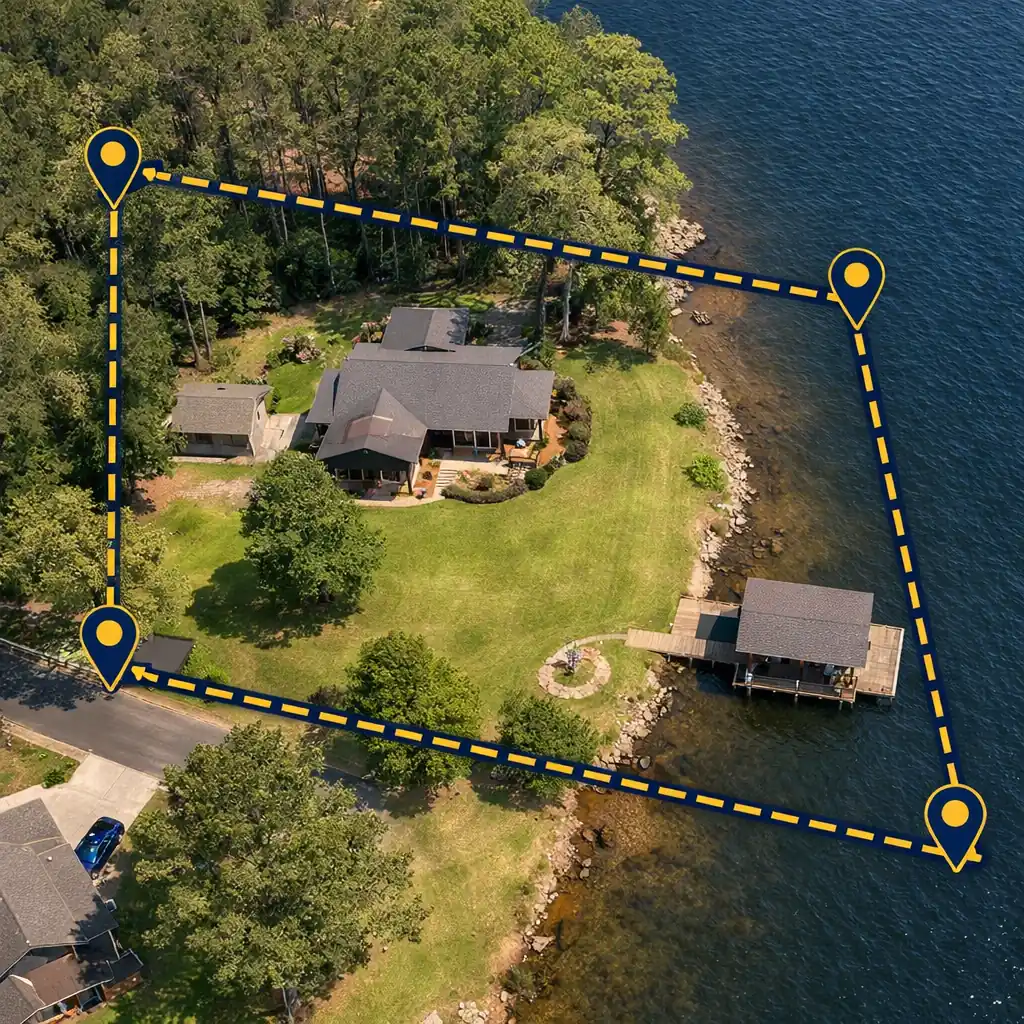
What Is a Property Survey?
A survey is a drawing of your property's boundary lines. It shows the north, south, east, and west lines of what you own, along with a diagram of what sits on the property: your house, a pool if you have one, fences, storage buildings, that kind of thing. It comes with field notes and a seal on the main drawing, plus the date and legal description. A lot of surveys are printed on that larger blue paper, but it doesn't have to be. A copy works fine too.
Why It Matters When You're Selling
The more information you can hand a buyer, the smoother things go. When buyers can look at a real survey and see exactly where the property lines fall, there's no guessing and no confusion once an offer comes in. It just makes the whole process move faster. That goes double for waterfront, where docks, boathouses, and the shoreline itself raise questions a buyer will ask early. If you are selling on the water, here is how I handle Lake Palestine listings.
Where to Find Your Old Survey
Before you assume you don't have one, check your closing paperwork from when you bought the home. Most title companies hand over two or three copies at closing, so it's probably already sitting in a folder somewhere. If you can't find it, call or email the title company you closed with, even if it's been ten or fifteen years. Chances are good they still have it on file and can email you a copy or let you pick one up.

Most sellers already have a survey sitting in old closing paperwork.
What If You Don't Have One at All?
You can order a new survey ahead of time if you want to, but you don't have to. Most purchase contracts have a line item for who pays for the survey, the buyer or the seller. Here's something a lot of sellers don't realize: if your buyer is financing through FHA, VA, or even some conventional loans, a survey is going to be required. The title company and the lender will both need it.
Why Surveys Take Longer Than You'd Think
Lenders don't order the survey right away. They wait until the appraisal is done and the loan looks like it's actually moving forward before they spend the money, since they're not going to put a buyer on the hook for a survey on a house they might not end up buying. Appraisals are running about three weeks right now. Add another two to three weeks for the surveyor to get to it, and you can see how that eats into a four to six week closing timeline fast.
A Way to Keep Things Moving
If you want to avoid that bottleneck, you can offer to order the survey yourself as the seller. You can build the cost into your sales price, so if a survey runs somewhere between $700 and $800 (more if you've got acreage), you negotiate that into the deal. The upside is you get to order it right away instead of waiting on the lender's timeline. If that buyer falls through for any reason, you still have a current survey ready to go for the next one. You're not losing anything by having it done early.
Bottom Line
Pulling your survey together before you list isn't required, but it saves time and it saves headaches. If you're not sure where to start, that's exactly the kind of thing I help with every day.