A survey can save you from a genuinely expensive mistake, but only if you actually know what it's telling you. I've seen buyers get caught off guard by fence lines, easements, and old surveys that didn't match the property the way they assumed. Around here that matters more than people realize, so let's go through what to watch for.
Why It Matters More Around Lake Palestine
A lot of the land around Lake Palestine, Tyler, Chandler, and the surrounding communities has some history to it. Lots that were split off years ago, fences that moved a little over time, shared driveways, drainage that runs a certain way for a reason nobody remembers anymore. None of that shows up in a listing photo. It shows up in the survey. If the lake itself is where you are looking, my Lake Palestine neighborhoods guide covers how these communities are laid out, and the survey is what tells you where your piece of one actually stops. On the water, it also marks the 355-foot line that Lake Palestine dock permits are built around.
Looking at a Home and Not Sure What the Survey Says?
Send me your contact info and tell me what you're looking at. I'll walk through the survey with you before you get anywhere near closing.
Mistake #1: Assuming the Fence Is the Property Line
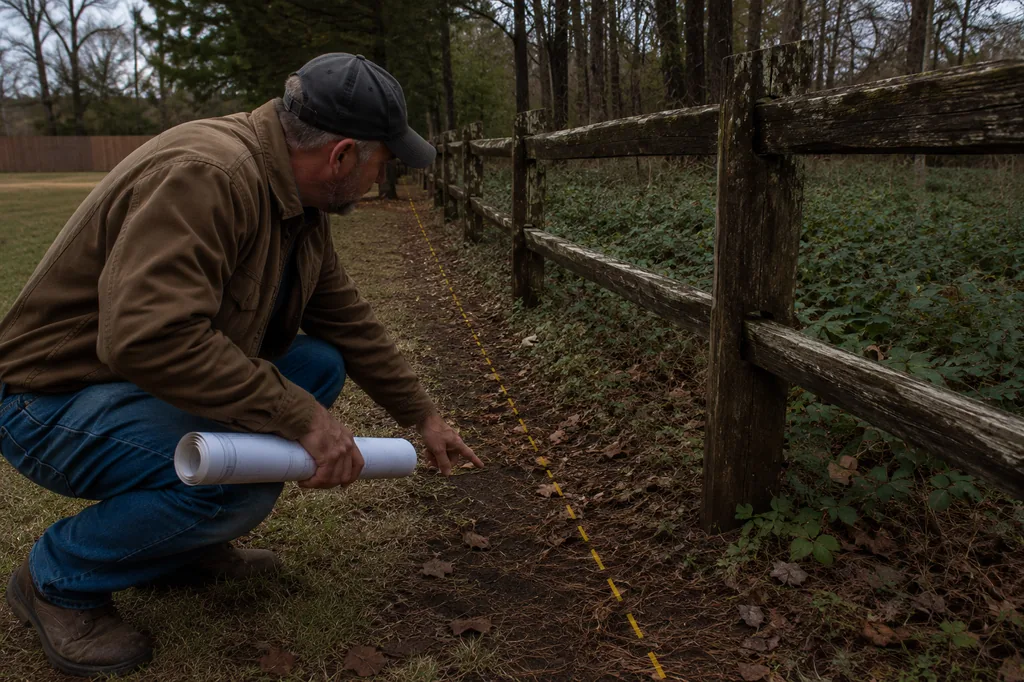
This is the one I see most. Sometimes the fence is right on the line. Sometimes it's not even close. A survey will show you whether that fence, driveway, shed, or patio actually sits where it should, or whether it's crossing a boundary or sitting inside an easement. If it's off, that can turn into a repair bill, a title issue, or a conversation with a neighbor you'd rather not have.
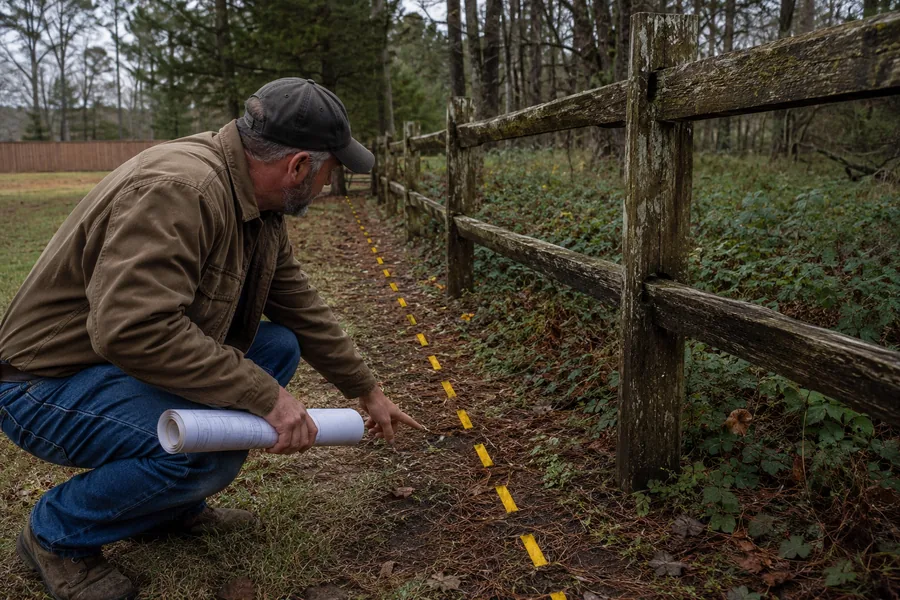
A fence line doesn't always match the legal boundary underneath it.
Mistake #2: Trusting an Old Survey Without Checking It
An older survey can still be good, but only if nothing has changed since it was drawn. New fences, an added pool, a patio, a storage building, any of that can make an old survey out of date. If the seller can't confirm nothing's changed, it's worth taking a fresh look before you close.
Mistake #3: Waiting Too Long to Bring Up a Problem
If a survey turns up an issue, it's a lot easier to deal with before closing than after you've already signed. That's your window to ask questions, negotiate, or decide if the property still makes sense for you. Your agent, the title company, and the surveyor can help keep things moving, but somebody has to actually read the survey and speak up.
What a Survey Can Actually Reveal
Boundary lines: whether what's on the ground (fences, trees, outbuildings, driveways) matches what's legally on paper.
Easements and access: utility easements, drainage easements, or access rights that can affect where you're allowed to build, park, or add on.
Encroachments: when part of a structure or improvement crosses into another property or into an easement. Worth catching early, since it only gets harder to deal with later.
What to Do Before You Close
- Read the survey yourself. Don't assume it's just paperwork for the title company.
- Walk the property against it. If the fence or driveway doesn't line up with what the survey shows, ask before you move forward.
- Ask directly whether anything has changed since the survey was done, especially if it's more than a couple years old.
Bottom Line
A survey isn't just a box to check on the way to closing. It's how you catch a boundary or easement problem before it becomes your problem. If you're not sure what a survey on a property you're looking at is actually telling you, that's exactly the kind of thing I help with every day.